- The Scarlet Letter
- Posts
- No One Is Illegal
No One Is Illegal
ICE's operation in Columbus, Some Good News and Why Cars Hit Buildings

The Scarlet Letter
January 26, 2026

Are you interested in sponsoring the best local newsletter on the planet? Reply to this email to help your organization reach hundreds of thousands of engaged Columbusites.
Top of Mind
Operation Buckeye Is Not Public Safety
The Scarlet Letter does not fuck with ICE. We do not support ICE’s actions here. Not the scale, not the tactics, not the fear it injects into neighborhoods that already carry enough stress without federal agents turning daily life into a scavenger hunt for survival.
According to the U.S. Department of Homeland Security, more than 280 people in central Ohio were detained in a single week, Dec. 16 to 21, during what ICE called Operation Buckeye. Local advocates and service providers say the fallout has been immediate and brutal: people not coming home, cars found abandoned, frantic calls to legal offices from spouses trying to figure out where someone was taken and what happens next.
The Ohio Immigrant Alliance reported that at least 214 people were arrested and in detention as of Dec. 24, and said the real number is likely higher. They also found that 93% were men and 80% appeared to be Latino. If you are looking for the part where this feels “targeted” and “precise,” keep looking.
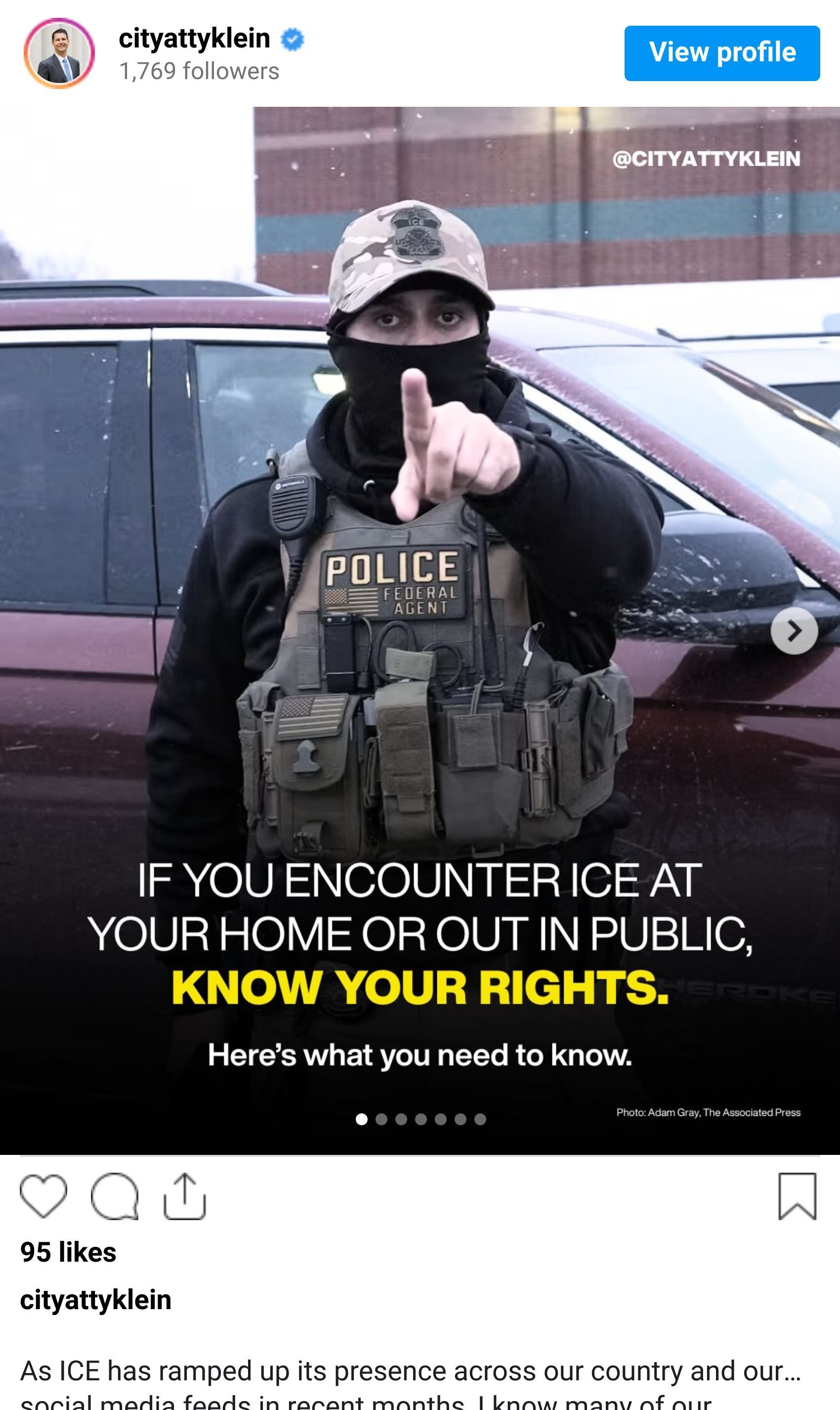
ICE has tried to frame the operation as a crackdown on people with serious criminal backgrounds, listing a handful of examples in a release. But what they have not done, at least publicly, is answer the most basic question: how many of the 280+ people detained actually had criminal records. Without that, the messaging reads less like public safety and more like PR.
Meanwhile, the people on the ground in Columbus are describing something else entirely. Attorneys and immigration service workers say they saw a sudden spike in “ICE reports,” including traffic stops and detentions that left families scrambling. Some clients are now afraid to go to routine ICE check-ins, even though missing them can make things worse. Some parents have stopped sending their children to school. Not because they do not value education, but because they are terrified that a normal day could end with a family separated.
Then there is the detention piece, where the story gets even darker. An analysis from advocates said 137 detainees were taken to Butler County Jail, with others sent to facilities around the state. Butler County Jail has been flagged for overcrowding, with reported population numbers far above recommended capacity. People detained there have reported packed cells and inadequate conditions. This is not a “process.” It is a pressure cooker.
And if you want the simplest version of why we reject this kind of operation, it is this: when enforcement depends on fear, it stops being about safety and starts being about power. You do not build trust by making people scared to drive to work, pick up their kids, or answer the door.
Columbus deserves better than a policy that treats entire communities like collateral damage. Ohio deserves better than “Operation Buckeye” as a brand name for human misery. And if local leaders say this makes the community less safe, we are inclined to believe the people who actually live here.
Scarlet Letter Trivia
Question: This snow sucks. How many days till spring
A. 100
B. 52
C. 68
D. 10
Why Cars Hit Buildings in Columbus, Ohio
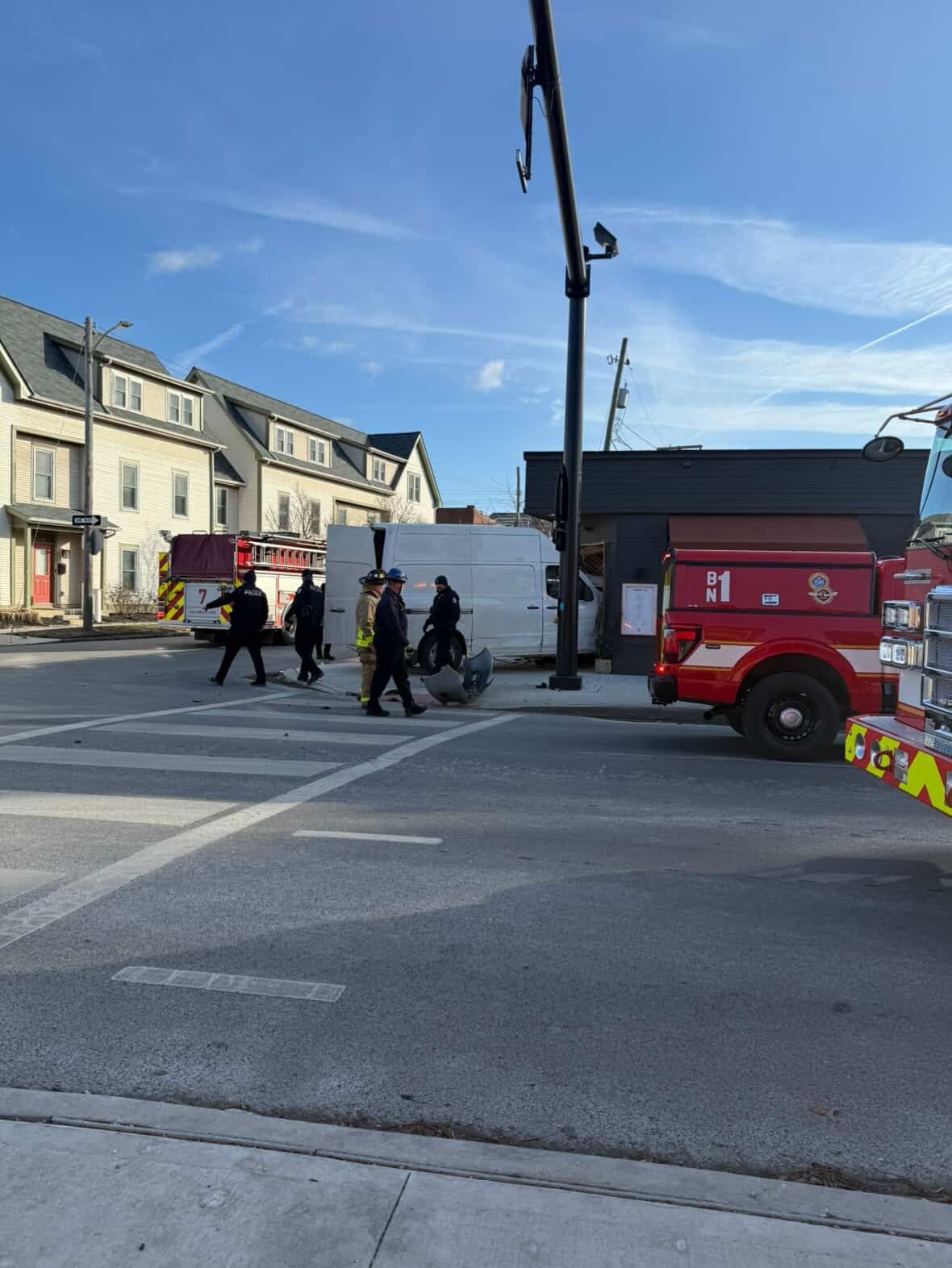
Mezcla is going to be closed for a minute. . .
Why Does this Happen
If it feels like cars are crashing into Columbus buildings at an alarming rate — that’s because they are. So far this year, 37 vehicles have made surprise entries into Central Ohio storefronts, porches, living rooms, and lobbies, blurring the line between traffic pattern and demolition derby. It’s become such a recurring spectacle that you half expect to see “Drive-Thru Closed” signs at coffee shops without drive-thrus. But here’s the kicker: that number might only scratch the surface.


Does this happen elsewhere?! YES.

In April 2022 The Storefront Safety Council completed an exchange of data and methodologies with an arm of Lloyd’s of London, the largest insurance market in the world. Lloyd’s found that their data was valid and credible and that their collection methodology gave them such high confidence that their collection of data concerning vehicle-into-building / storefront crashes should be used by researchers and risk managers as “source data” given the lack of any other available data sets involving private property accidents in the United States.
Lloyd’s concluded in their remarks that the data, as complete as it is, reflects only a fraction of the total of storefront crashes that occur every single day: At the most conservative, it appears that the SSC database captures 1 in 12 incidents (8.33%)
Storefront crashes occur more than 100 times daily, and if we are only tracking 8%, that means the problem is actually WAY bigger than we thought…

So what now? Well, unless every building in Columbus suddenly installs bollards and barriers like a presidential motorcade route, we’re left relying on better data, better planning, and the occasional miracle. The Storefront Safety Council may be tracking the tip of the iceberg, but the real fix will require more than spreadsheets. Until then, if you're opening a business in Central Ohio, maybe skip the corner unit and ask your insurance rep about “vehicular incursion coverage.” It's apparently... a thing.
Columbus Ended 2025 With Its Lowest Homicide Total In Nearly 20 Years
Columbus ended 2025 with a rare headline that actually deserves to be said out loud: the city recorded 81 homicides, the lowest total since around 2007, according to city leaders. That does not mean the work is done, but it does mean something moved in the right direction, and for a city that has carried heavy years lately, that matters.
Mayor Andrew Ginther and Police Chief Elaine Bryant also pointed to something families want almost as much as prevention: answers. Bryant said detectives solved 69 homicide cases from 2025 and cleared 30 more from previous years, which is a meaningful sign that more people are being held accountable and more families are getting closure than they were before.
There are other indicators moving the right way too. Bryant said felonious assaults are down by about 500 cases over two years, and city leaders credited stronger community cooperation, including a record number of tips coming in to help investigations.
And the city is leaning into what seems to be working. Leaders highlighted an 18-month pilot program in South Linden and Milo-Grogan that treated non-fatal shootings with the same focus as homicides. Police said they solved about 75% of those non-fatal shooting cases in the pilot area, compared to roughly 46% of non-fatal shootings typically being solved, and the program is expected to expand in 2026.
Now, the hard truth that belongs in the same paragraph as the progress: domestic violence homicides remain a major exception to the overall decline. Ginther said the city is “not going in the right direction” on that front, and he framed it as a community issue that cannot be solved by police alone.
That is the glass-half-full version too, even if it is painful: the city is identifying the problem clearly, saying it plainly, and acknowledging that it will take more than enforcement to fix it. If Columbus can reduce violence in one area, it can put that same focus, funding, and coordination into the places where danger hides behind closed doors.
So yes, take the win. Columbus earned it. Then take the lesson: progress is real, but it has to be shared by everyone, everywhere, including at home.
Trivia Answer
B. 52 days till spring.
P.S. Sorry for the lack of pictures; there isn't a lot of room for funny gifs when it comes to these subjects.
Signing Off

