- The Scarlet Letter
- Posts
- Lots of stuff happened last week
Lots of stuff happened last week
lots of new rules, power went out...I dont even mention the weather.

The Scarlet Letter
December 15, 2025

Are you interested in sponsoring the best local newsletter on the planet? Reply to this email to help your organization reach hundreds of thousands of engaged Columbusites.
Top of Mind
COLUMBUS JUST CAPPED UTILITY FEES RENTERS HAVE BEEN QUIETLY PAYING FOR YEARS.
If you rent in Columbus and don’t get your water or electric bill directly from the utility company, the City Council just stepped in.
On Monday, the Columbus City Council voted unanimously to regulate utility reselling, the practice where landlords receive utility bills and then pass them on to tenants with added fees. The legislation, sponsored by Councilmember Christopher Wyche, places firm limits on what landlords and third-party billing companies can charge.
The vote comes at a moment when utility costs are already rising, and renters are feeling the impact.
WHAT THE NEW RULES DO
Under the ordinance, landlords and billing middlemen must:
Charge tenants no more than the actual utility cost
Cap administrative fees at $8 per billing cycle
Provide clearer, more transparent bills
Offer payment plans for overdue balances
Avoid higher late fees than the utility itself would charge
In short: no markups, no mystery fees, no creative math.

WHY COUNCIL STEPPED IN
In many multifamily buildings, tenants are not direct customers of water or electric utilities. Bills go to landlords first, who then resell usage to tenants, often adding administrative fees or surcharges.
A long-standing problem with that setup is access. Residents billed through landlords typically cannot enroll in city utility assistance programs, even if they qualify.
Right now, only about 8,500 Columbus residents are enrolled in the city’s utility assistance program. Wyche said he hopes these new rules will double enrollment by next year, since tenants will finally have the documentation required to apply.
This matters more now than ever. Just weeks ago, City Council approved water rate increases expected to cost the average customer about $125 more per year.
WHY IT’S NOT A BAN
Council initially discussed banning submetering outright. That idea was pulled back after concerns that landlords could offset the loss by raising rent.
Instead, the city chose regulation over prohibition. Wyche acknowledged the legislation isn’t perfect, but said it addresses inflated bills while avoiding immediate ripple effects in rent prices.
WHAT HAPPENS NEXT
The changes will roll out over the next year and will be enforced largely through complaints filed with the city. Violations can result in $150 fines.
Wyche also signaled that Columbus may not be done. The city is considering a rental registry, which could make enforcement easier and bring more accountability into the system.
At the state level, bipartisan legislation to regulate submetering has sat untouched for years. Columbus moved first.
THE BOTTOM LINE
City Council didn’t eliminate utility middlemen.
But it did take away their ability to quietly pad bills.
For renters facing higher water rates, rising electric costs, and fewer safety nets, this is one of the rare cases where regulation actually lowers the ceiling instead of raising it.
And in Columbus right now, that’s nothing.

Here’s a closer look at Columbus, Photo from the same article.
Scarlet Letter Trivia
Question: What year was the worst power outage in Ohio History
A) 2008
B) 2012
C) 2022
D) 1998
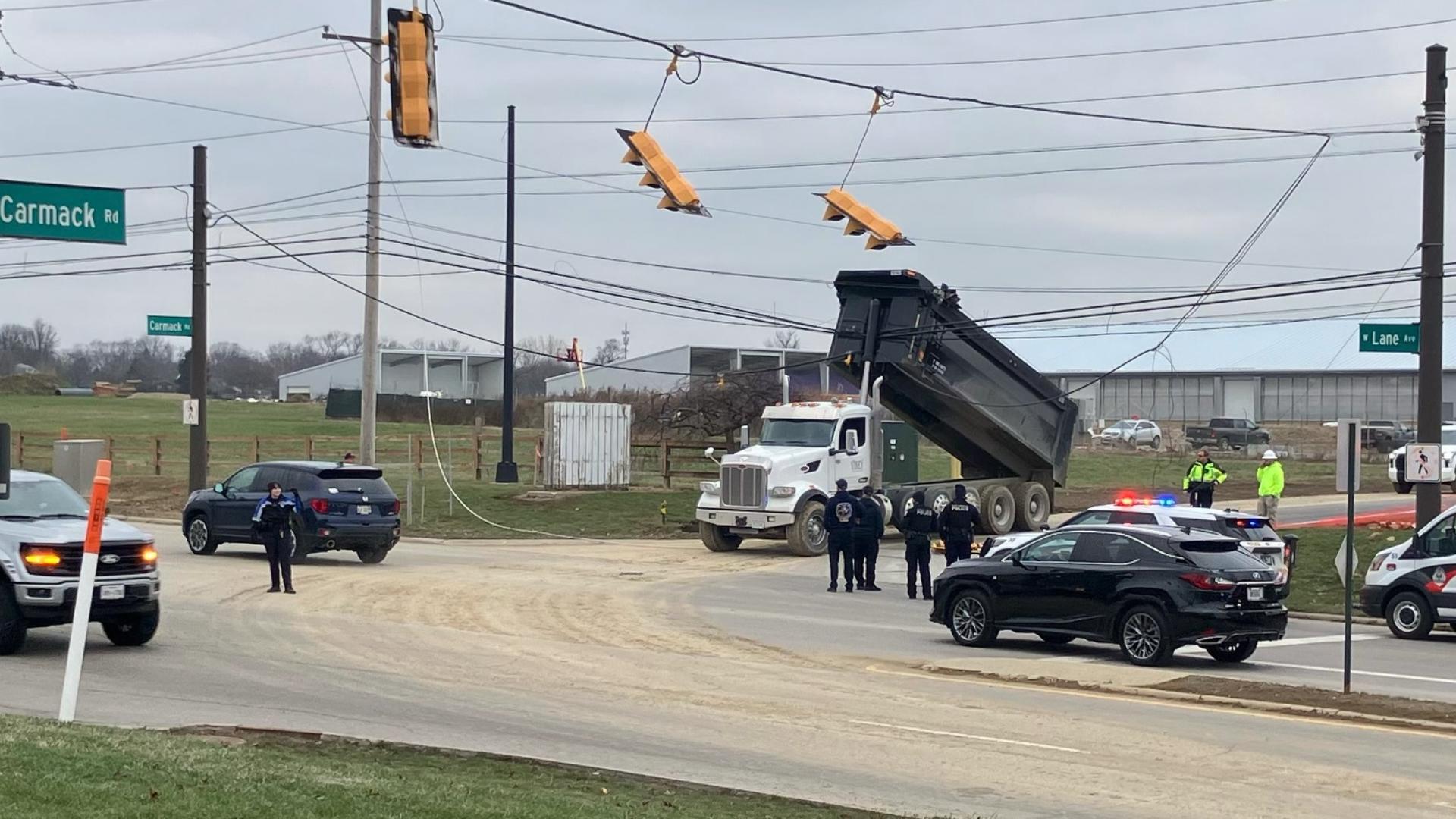
A DUMP TRUCK KNOCKED OUT POWER FOR NEARLY 3,000 PEOPLE BY OSU
10tv
Columbus’s power grid had a very Friday-afternoon moment.
A dump truck crash near Ohio State’s West Campus knocked out electricity for 2,889 AEP Ohio customers on Friday afternoon, cutting power to homes, apartments, and campus-area buildings just after 3:15 p.m.
The crash happened near Carmack Road and West Lane Avenue, where AEP Ohio says the truck struck utility equipment, triggering the outage.
WHAT WE KNOW
Peak outage: 2,889 customers
Location: West Campus area near OSU
Time: Around 3:15 p.m. Friday
Cause: Dump truck collision with AEP equipment
Estimated restoration: Around 6 p.m.
By 7:20 p.m., AEP’s outage map showed power restored to nearly everyone, with just 12 customers still affected as crews wrapped up repairs.
THE BIGGER PICTURE
No injuries were reported, and AEP crews were on site quickly to assess the damage and restore service. Updates were shared through AEP Ohio’s social channels as repairs progressed.
For thousands of students and residents, though, the incident was a reminder that sometimes the biggest disruption to your Friday plans isn’t weather, finals, or football.
It’s a dump truck meeting the wrong piece of infrastructure.
Power was mostly back by evening.
The memes probably lasted longer.

OHIO IS BANNING “GAS STATION WEED” and making it Illegal to bring weed in from other states.

Ohio’s brief era of THC gummies next to the beef jerky is coming to an end.
Gov. Mike DeWine said Thursday he will sign Senate Bill 56, a sweeping measure that bans intoxicating hemp products and modifies Ohio’s voter-approved recreational marijuana law from 2023.
“No longer will it be the Wild, Wild West,” DeWine said, referring to delta-8 and other THC-infused hemp products sold in gas stations, smoke shops, and CBD stores across the state.
If signed before the end of the year, the law could take effect as soon as March.
WHAT’S GETTING BANNED
Senate Bill 56 targets intoxicating hemp products sold outside licensed dispensaries.
That includes:
Delta-8 and similar THC products
Hemp-derived gummies and beverages
Products sold in gas stations and convenience stores
DeWine has pushed for regulation since January 2024, citing child safety.
According to the Ohio Poison Control Center:
257 delta-8 poisoning cases have been reported in recent years
102 in 2023 alone
40 involving children under six
“You won’t be able to walk into a gas station and let an 11-year-old buy the stuff,” DeWine said.
WHY NOW
DeWine attempted a temporary ban earlier this year via executive order, but a Franklin County judge blocked it. That case is still pending.
The bill also aligns Ohio with new federal rules, which ban hemp products containing more than 0.4 mg of THC per container. States are allowed to act sooner. Ohio chose to.
WHAT CHANGES FOR LEGAL MARIJUANA
Recreational marijuana remains legal, but with new limits:
THC caps lowered
Extracts: 70% max (down from 90%)
Flower: 35% max
Smoking is banned in most public places
Marijuana must stay in its original packaging
Bringing legal marijuana from another state becomes a crime
The bill also allows 5 mg THC beverages to continue through Dec. 31, 2026.
Gif by paramountplus on Giphy
WHERE THE TAX MONEY GOES
The legislation directs 36% of marijuana tax revenue to cities and townships that host dispensaries, giving local governments a larger share of the proceeds.
THE SHORT VERSION
Ohio is ending unregulated THC sales and tightening the rules on legal weed.
Gas station gummies are out.
Dispensaries stay.
The law you voted for still exists, but with new caps, new crimes, and clearer boundaries.
The Wild West phase is over.
COLUMBUS IS ABOUT TO GET SERIOUS ABOUT PARKING

If you’ve ever parked in a bike lane because “no one was using it,” Columbus has some news for you.
City Council is moving forward with a major overhaul of the city’s parking code, reshaping how tickets are issued, how much they cost, and how long drivers have to respond. Officials insist this isn’t a cash grab. It’s about safety, mobility, and preparing the city for a future where buses, bikes, and pedestrians actually have space to exist.
Council is expected to vote on the changes Dec. 15, with the new system rolling out in early 2026 and updated fines kicking in by April.
WHY PARKING IS GETTING A MAKEOVER
Columbus’ current parking rules are a mess. More than 50 violations, inconsistent fines, and a system where tickets can quietly snowball into triple-digit problems in under two weeks.
Councilmember Lourdes Barroso de Padilla says thousands of residents collectively owe millions in unpaid parking fines, often because tickets escalate before people realize what happened.
The proposed fix:
Extend the response window from 10 days to 30
Reward early payment with lower fines
Reduce the “I forgot about it and now it’s $100” problem
WHERE THE CITY IS DRAWING THE LINE
The biggest changes target safety-related violations, especially those that interfere with new transportation infrastructure.
Expect tougher enforcement for:
Blocking bike lanes
Stopping in bus stops or future bus-only lanes
Parking in crosswalks
Stopping on sidewalks
These will fall under the most serious category, with fines reaching $100 if unpaid after 30 days.
City officials were clear: lanes don’t work if cars keep sitting in them.
WHERE DRIVERS GET A BREAK
Not every violation gets harsher.
Expired tags, one of the most common tickets issued in Columbus, would get more flexibility:
Tags expired less than 30 days: warning only
Up to three tickets allowed at $30 each
No escalating penalties tied to response time
The city says this is about avoiding unnecessary financial spirals over paperwork delays.
HOW THE NEW FINES WORK
Most violations would fall into four categories, each with tiered pricing:
Egregious safety violations: $80 → $100
General safety violations: $50 → $90
Parking management issues: $50 → $90
General parking violations: $30 → $50
Parking in a handicapped spot without a permit stays at $500. No changes there.
THE REAL REASON THIS IS HAPPENING
This isn’t just about parking. It’s about what Columbus is becoming.
With bus rapid transit on the way and bike lanes expanding, city leaders want rules in place before LinkUS corridors launch. The message is simple: if the city builds dedicated lanes, it plans to protect them.
As Barroso de Padilla put it, not everyone loves these changes, but a lot of people depend on them.
WHAT HAPPENS NEXT
City Council is scheduled to vote on the proposed parking code updates on Dec. 15. If approved, the changes would take effect in January, with updated fine amounts beginning in April.
City leaders say the revisions are intended to improve safety, reduce congestion, and prepare Columbus for expanded transit and mobility projects, including future bus rapid transit corridors.
For drivers, that means clearer rules, more time to respond to tickets, and higher penalties for violations that block bike lanes, bus lanes, and crosswalks.
Trivia Answer:
A) 2008 a storm from hurricane Ike wipped out power for 5 days for millions of Ohioans. Some didnt have power for 2 weeks.

I wish someone would look at me the way Skully looked at Molder!
