- The Scarlet Letter
- Posts
- House Bill 492


Are you interested in sponsoring the best local newsletter on the planet? Reply to this email to help your organization reach hundreds of thousands of engaged Columbusites.
Top of Mind
PAPERS, PLEASE
Ohio just changed what you are legally required to tell police during a traffic stop.
As of October 6, drivers and passengers can be required to provide their name, address and date of birth when an officer reasonably suspects a violation of Ohio's motor-vehicle laws.
Refuse, and you can now be charged with a fourth-degree misdemeanor.
That requirement is new.
Before House Bill 492, Ohio law already required drivers to provide things like a driver's license, registration and proof of insurance. Police could also require someone to provide their name, address and date of birth when they suspected that person of committing a criminal offense.
HB 492 expands that authority to traffic stops involving Ohio's motor-vehicle laws.
Supporters, including the bill's sponsors, say the change gives officers another tool to identify people during stops and improves officer safety.
The Ohio Public Defender opposed the bill, arguing that Ohio already had laws in place to identify drivers and that HB 492 gives police broader authority during encounters that may have nothing to do with a criminal offense.
The office also warned that the law creates another way for a traffic stop to become a criminal case simply because someone refuses to provide information they previously were not required to give.
The bill also expands Ohio's law against interfering with an arrest and increases the penalty in certain cases from a minor misdemeanor to a second-degree misdemeanor.
That's what makes this law worth paying attention to.
Ohio has expanded the amount of personal information people can be compelled to give police during a stop, and refusing can now carry a criminal penalty.
Whether you see that as a safety measure or an expansion of police authority, it is a meaningful change.
Scarlet Letter Trivia
What was the date of the earliest snow fall in Columbus history?
A. June 8th, 1898
B. October 10, 1906
C. September 16th, 1976
D. October 12th, 1903
THERE'S A MAN IN THE BUSHES

Giphy
If you've ever walked through Pearl Alley Downtown, looked up and wondered why there is an eight-foot-tall shrub man carrying a briefcase on top of a building, you found one of Columbus' stranger pieces of public art.
He's known as Topiary Man, and he's been standing above Pearl and Lynn alleys since 2017.
The sculpture sits roughly four stories above the street behind the Rhodes State Office Tower. He's wearing a white tie, carrying what looks like a briefcase and stepping toward the edge of the building like he has somewhere to be.
Topiary Man was created by Columbus artist Malcolm Cochran, whose other work includes Dublin's Field of Corn and the elephant fountain in Goodale Park.
If the figure looks familiar, that's probably intentional. He appears to resemble former Ohio Gov. Jim Rhodes, whose statue stands about a block away in front of the building that bears his name.
Cochran never gave the sculpture one official meaning. The idea was to surprise people and leave the rest open to interpretation.
Topiary Man was part of a larger effort to improve Pearl and Lynn alleys. More than $1 million went into new brickwork, leveled surfaces, buried utilities and public art designed to make the area more inviting for restaurants, retailers and pedestrians.
Cochran also designed some of the area's unusual light fixtures, including giant green arms holding glowing white “pearls.” One was modeled after a Pearl Market vendor holding a cantaloupe.
There is also a giant shrub-covered “Pearl ♥ Lynn” nearby.
Nearly nine years later, Topiary Man is still up there overlooking the alley, briefcase in hand.
Whatever meeting he was headed to, we can probably stop holding it for him.
TARGET PRACTICE

The Boys & Girls Clubs of Central Ohio's Milo-Grogan Clubhouse just got a major upgrade.
On September 25, Target renovated the clubhouse through its Bullseye Builds with Community program.
Milo-Grogan was one of just 13 organizations nationwide selected for a project this year.
Target reworked several spaces throughout the building, adding new furniture, classroom resources, sensory and calming areas and updates to gaming and recreation spaces.
The renovation also added a podcast studio and a teen esports area.
Target provided books, art supplies, hygiene products, school-supply restock kits and a new washer and dryer as part of the project.
The goal is simple: give BGCCO more space and better resources for the academic, social, emotional and leadership programs it provides to young people in Central Ohio.
And based on the club members' reactions when they saw the finished space, the renovation landed pretty well.
For a neighborhood clubhouse in Milo-Grogan to be one of only 13 organizations selected nationwide is a nice win for the community.
THE DEAD KNOW COLUMBUS BETTER THAN YOU DO
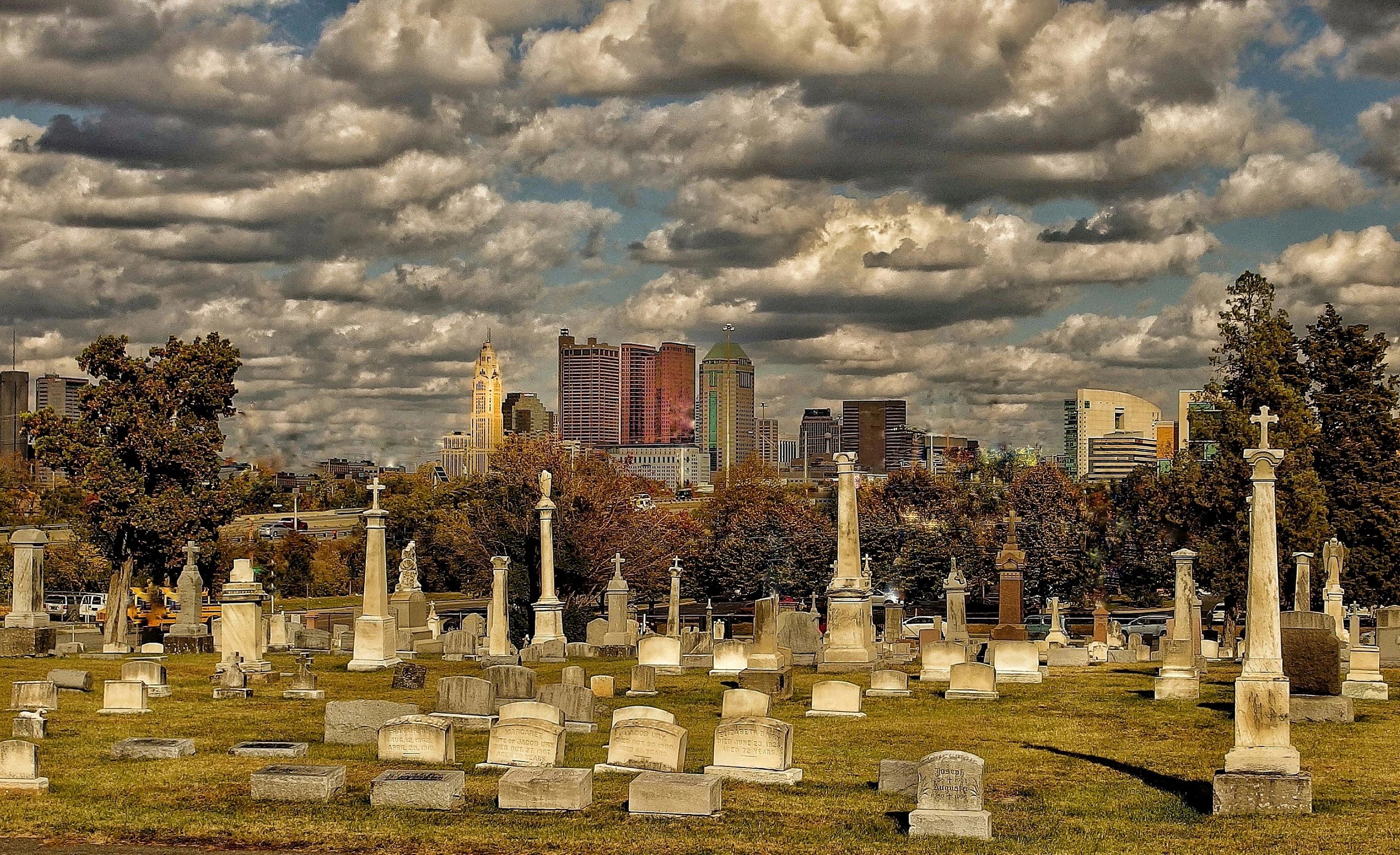
October is an easy month to sell someone on a ghost tour.
But Columbus Ghost Tours is worth doing even if you don't believe in ghosts.
The real attraction is the history.
The locally run tours dig into more than 200 years of Columbus stories, taking people through Downtown, German Village, Green Lawn Cemetery and some of the city's oldest buildings.
Along the way, you hear about old taverns, cemeteries, the former Ohio Penitentiary, James Thurber, buildings that disappeared and the people who shaped the city long before any of us got here.
The ghost stories are really just the hook.
What you're getting underneath them is one of the better Columbus history lessons you can find.
That local part matters, too. These are stories researched here, about people and places here, and told by people who have spent years digging into Columbus history.
Some tours focus on Downtown or German Village. Others go through Green Lawn Cemetery after hours, historic taverns or buildings you normally wouldn't have much reason to explore at night.
And once you know the stories, the city starts to look different.
A building you've passed a hundred times suddenly means something. A street name has a story behind it. An old facade becomes a piece of the city instead of just something you walk past.
You could read a book about Columbus history.
Or you could spend an evening walking through it.
Answer: B — The earliest measurable snowfall on record in Columbus was October 10, 1906, when the city recorded 0.1 inches of snow. The National Weather Service’s Columbus snowfall records go back to 1885.
